
A window sticker shows how a car was originally priced, equipped, and described when it was new. If you know how to read a window sticker, you can check the VIN, MSRP, factory equipment, packages, warranty, fuel economy, and safety details before trusting a used-car listing.
For Cadillac buyers, a Cadillac window sticker by VIN can help compare the seller’s claims with the original factory label.
Key Takeaways
- A window sticker helps confirm original MSRP, factory equipment, colors, warranty, and fuel economy.
- Standard equipment and added packages should be read separately because they affect value differently.
- A window sticker is useful before buying, but it should still be
Start with the Vehicle Specifications First
Before looking at the price or packages, confirm that the sticker belongs to the vehicle you are checking. It sounds basic, but this is where a lot of used-car confusion starts.
1. Match the VIN
The VIN on the window sticker should match the VIN on the dashboard, driver-side door jamb, title, registration, and seller listing. If one number is different, ask questions before moving forward.
A window sticker by VIN is useful because it connects the factory label to one specific vehicle, not just a similar model.
2. Confirm the Year, Make, and Model
Check the model year, brand, model, and body style. For example, a sticker may show a 2016 Cadillac CTS Sedan. That tells you more than “Cadillac CTS” in a listing.
Small detail? Maybe. But small details can change price, parts, insurance, and buyer interest.
3. Review Exterior and Interior Color
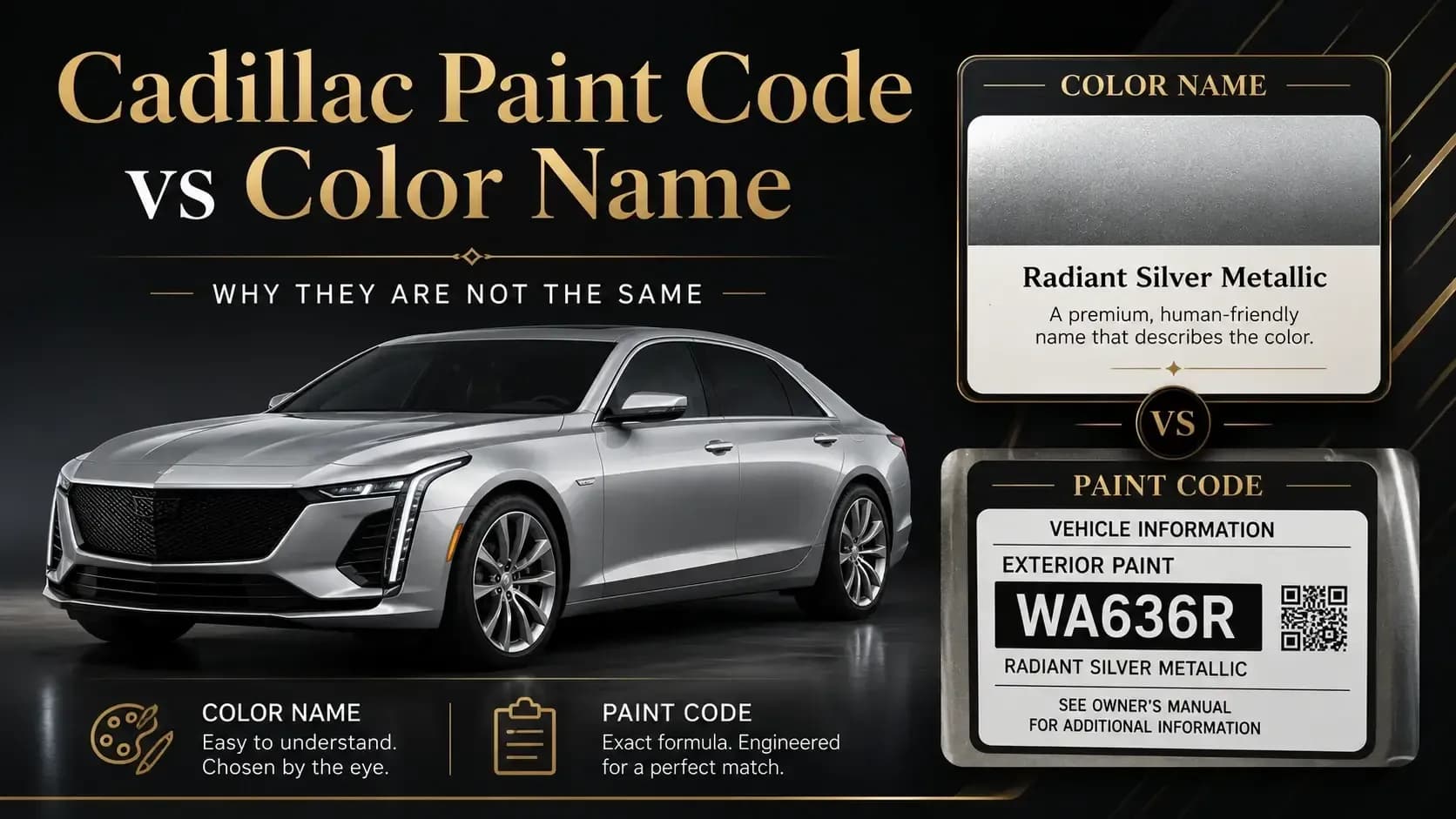
Original color can matter for resale, repairs, and restoration. A seller may call a car “silver,” but the sticker may show the exact factory color name.
For example, one Cadillac sample shows Radiant Silver Metallic exterior with Jet Black/Jet Black Accents and leather seating surfaces. That gives buyers a clearer
How to Read a Car Window Sticker Step by Step
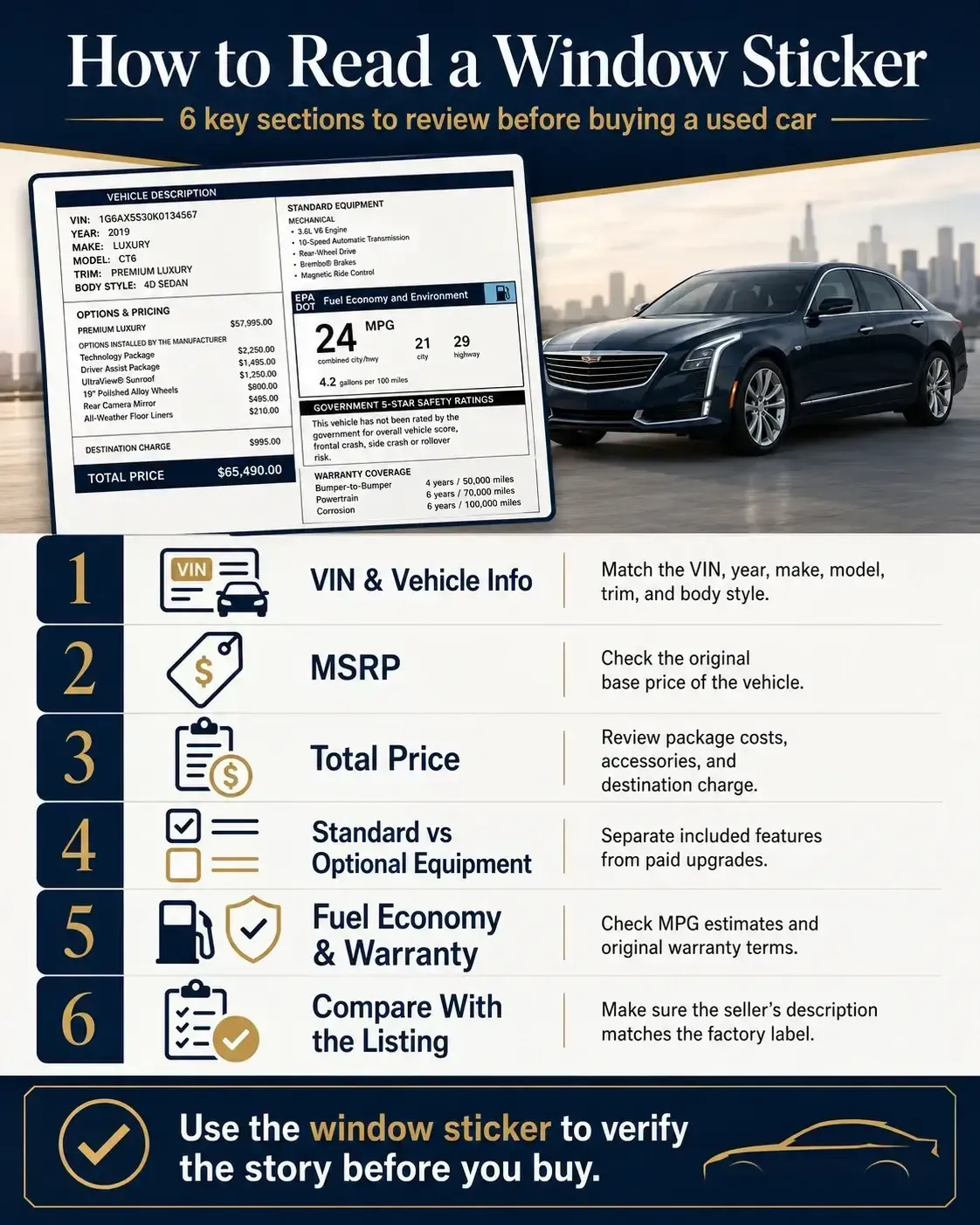
Once the vehicle identity checks out, read the sticker like a buyer. You don’t need to understand every tiny line. Focus on the parts that affect value, trust, and ownership costs.
1. Read the MSRP
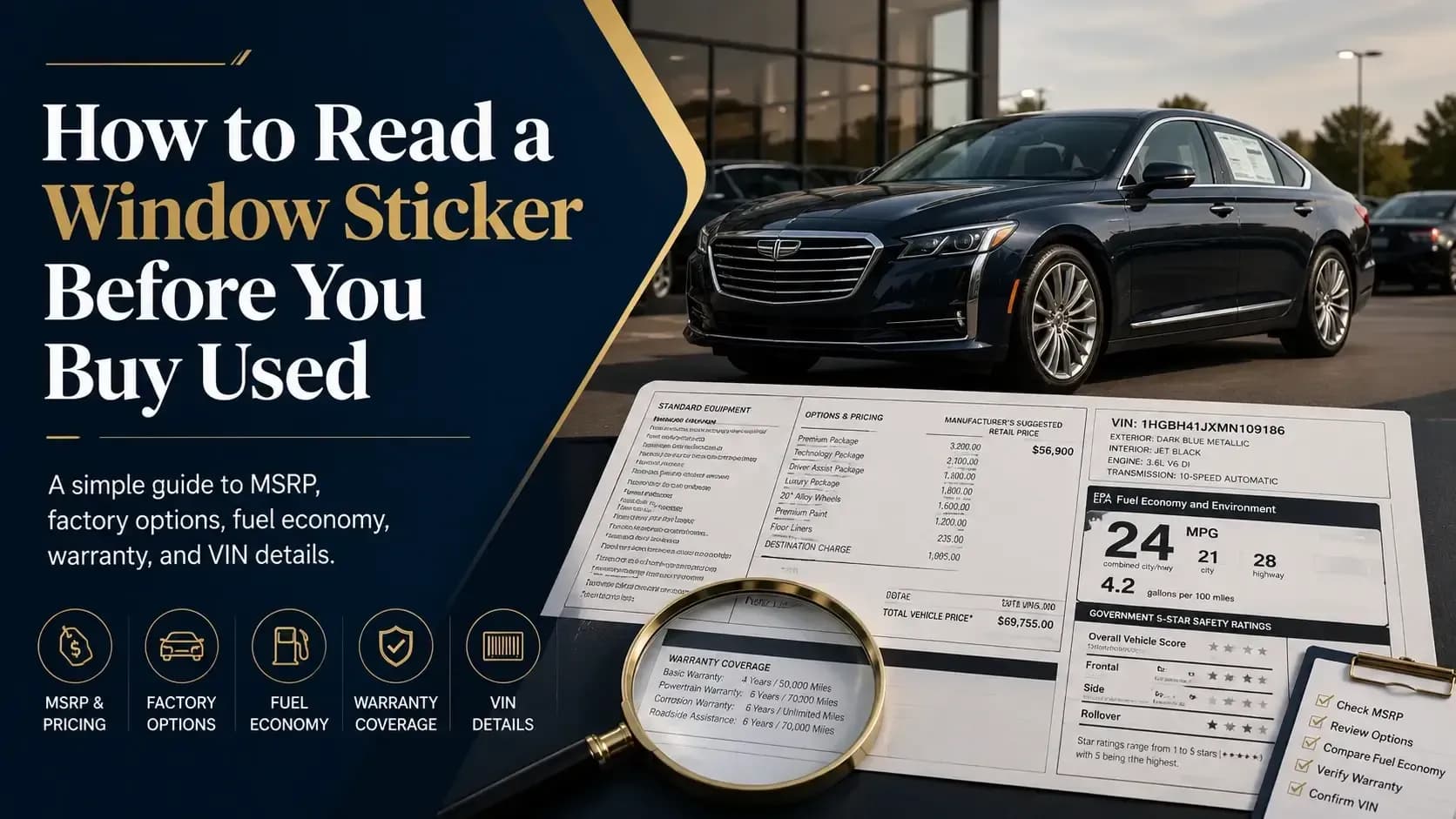
MSRP means Manufacturer’s Suggested Retail Price. It shows the original suggested price when the car was new.
In the Cadillac CTS sample, the MSRP is $53,285. That number does not tell you today’s used-car value, but it helps you understand the vehicle’s original price level.
2. Check the Total Vehicle Price
The total vehicle price includes the base MSRP plus listed packages, accessories, and shipping or destination charges.
In the same Cadillac sample, the original shipping charge is $995, and the total vehicle price is $60,335. That difference matters. It shows that added equipment helped push the final sticker price higher than the base MSRP.
3. Separate Standard Equipment from Added Items
This is where buyers often get tripped up.
How to read standard vs optional equipment on a window sticker comes down to this: standard equipment is included with the trim, while added packages or listed accessories may increase the total price.
Standard equipment may include interior features, safety systems, lighting, infotainment, wheels, drivetrain, or mechanical features depending on the model.
4. Look at Packages and Price Impact
Packages can change a car’s value more than photos show. The Cadillac sample lists items such as a V-Sport Package, Black Chrome Package, premium painted alloy wheels, all-weather mats, and other listed accessories.
This is why a seller saying “fully loaded” is not enough. The sticker shows what was actually listed with the vehicle.
5. Inspect the Mechanism
Mechanism information reflects the way the car was assembled to ensure driving ability. It includes such components as engine, transmission, drivetrain, suspension, braking system, and axle ratio.
The provided example of the Cadillac contains a 2.0L Turbo I4 engine, 8-speed automatic transmission, all-wheel drive, sport suspension, Brembo front performance brakes, and dual exhaust.
For secondhand car buyers and flippers, this information is critical for their needs.
6. Identify Safety Details
It can be rather difficult to verify safety details using pictures alone. The sticker may indicate the presence of rear parking assist, rear vision camera, lane change alert, airbags, tire pressure monitor, and other devices.
For family car buyers and dealers, this information may be as important as the price tag.
What Does a Window Sticker Tell You About a Car?
If you are asking what a window sticker tells you about a car, think of it as the car’s original sales snapshot. It does not show every repair or owner change, but it does show how the vehicle was presented when new.
Original Factory Equipment
This includes the features installed or listed when the vehicle was new. It may cover exterior, interior, mechanical, and safety equipment.
Original Pricing
The sticker may show MSRP, package pricing, accessory pricing, shipping charges, and total vehicle price. This helps explain why two similar vehicles may have different original values.
Factory Color Combination
The sticker can show the original exterior and interior colors. This is helpful when checking repaint work, interior swaps, or restoration accuracy.
Warranty Terms
A sticker may show original warranty coverage. In the Cadillac sample, warranty details include basic coverage of 48 months/50,000 miles and powertrain coverage of 72 months/70,000 miles.
Fuel Economy
How to read fuel economy on a window sticker is simple. Look for city, highway, and combined MPG or MPGe.
The Cadillac sample shows 24 combined MPG, 21 city, and 29 highway. It also lists annual fuel cost. Treat those numbers as a guide, because real driving depends on traffic, tires, maintenance, weather, and driving habits.
Safety Rating Sections
Some stickers include government safety rating areas, such as frontal crash, side crash, rollover, and overall score. These ratings should be compared with vehicles of similar size and weight.
The Parts Buyers Often Misread
You know what? Most buyers do not misread the whole sticker. They misread a few important pieces, and those pieces can change the deal.
MSRP Is Not Current Market Value
Original MSRP tells you what the car cost when new. It does not tell you what it should sell for today.
Mileage, condition, accident history, service records, location, and demand still matter.
Package Names Need Context
Some packages sound small but include valuable features. Others sound impressive but may be mostly appearance-based.
Always read what the package includes, not just the package name.
Dealer Add-ons May Be Separate
A window sticker may show factory-listed equipment and certain listed accessories. It may not show every dealer add-on, aftermarket part, or owner modification.
That upgraded audio system, wheel change, wrap, or tint may have happened later.
Fuel Numbers Are Estimates
Fuel economy numbers help compare vehicles, but they are not promises. A car driven in cold traffic with worn tires will not behave like a test-cycle estimate.
Window Sticker, Build Sheet, and History Report Are Different
This part matters because buyers often mix the documents together.
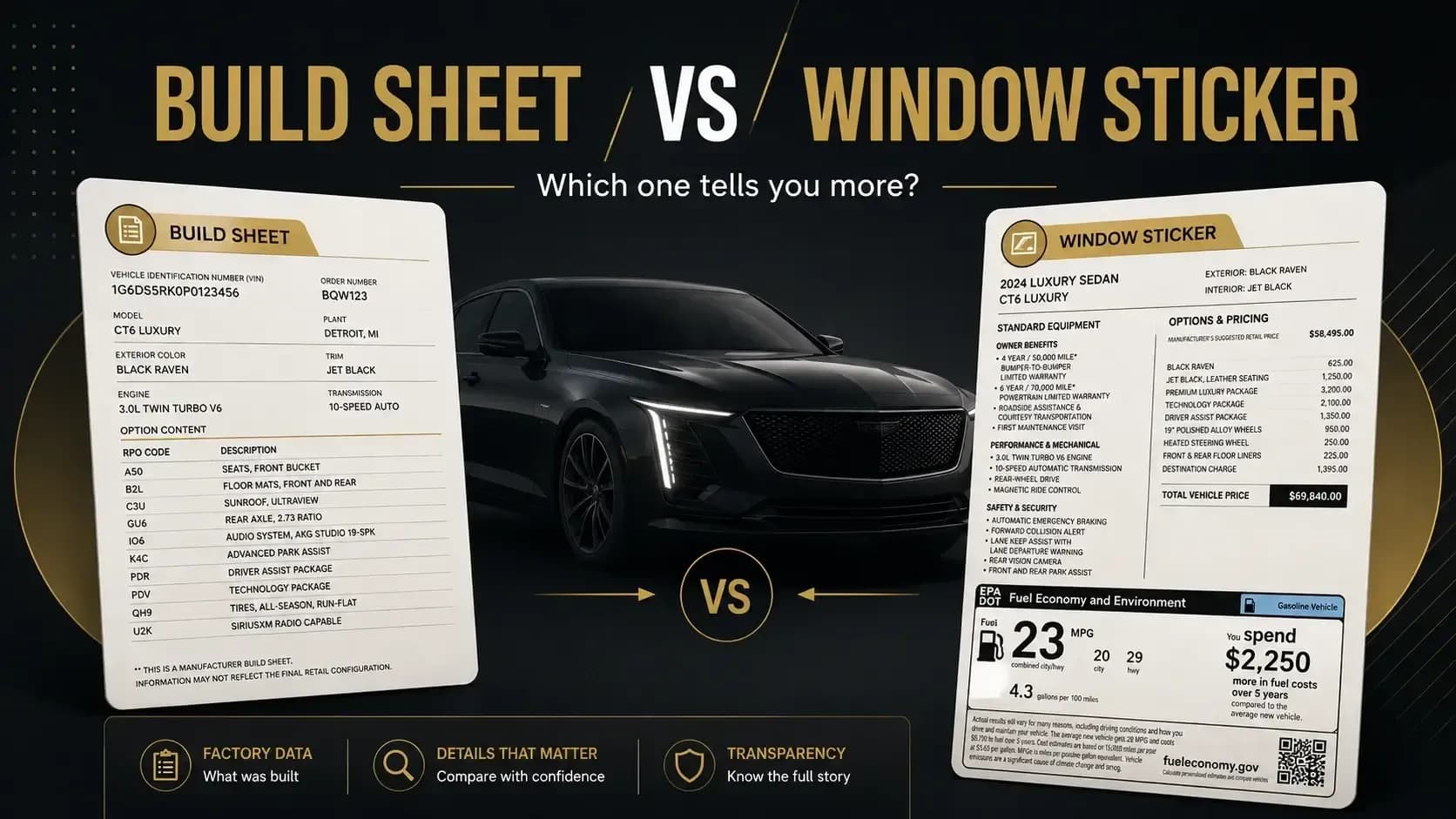
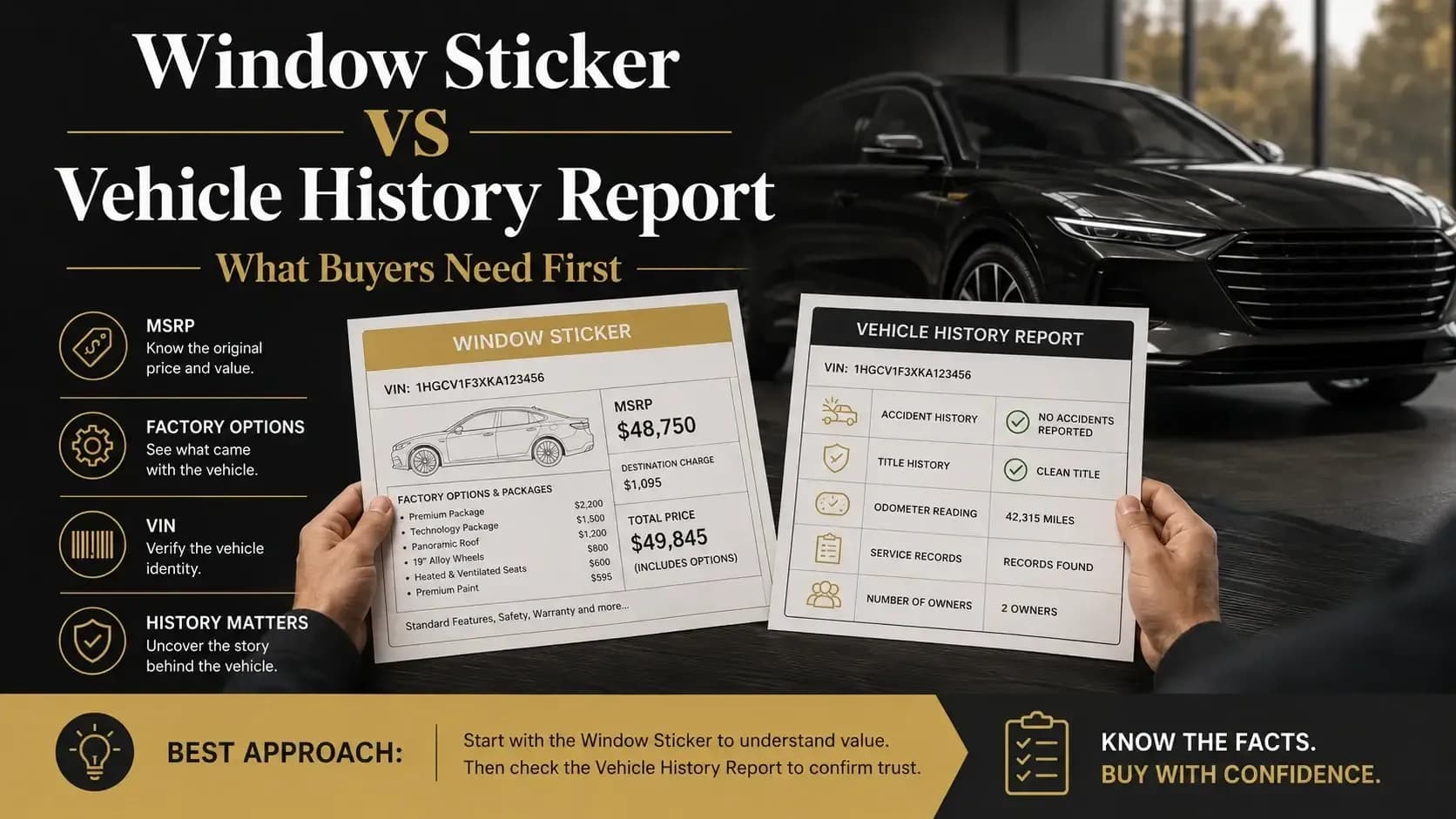
A window sticker shows the original sales label: MSRP, equipment, packages, warranty, fuel economy, safety details, and vehicle description. A build sheet focuses more on factory build configuration. A vehicle history report shows events after the car entered the road, such as title records, accident records, mileage readings, and ownership changes.
If you want to compare factory documents, read this guide on build sheet vs window sticker. If you are deciding which document helps first during a used-car deal, this guide on window sticker vs vehicle history report explains the difference clearly.
No single document tells the whole story. A sticker is a strong start, but it is not a mechanic’s inspection or a full history check.
How a Window Sticker Helps Before You Make an Offer
A Window Sticker VIN Lookup Guide is useful because it turns vague claims into details you can check.
Before making an offer, use the sticker to ask better questions:
- Does the VIN match the car and documents?
- Does the equipment match the seller’s description?
- Does the original MSRP support the asking price?
- Do the packages explain the vehicle’s value?
- Do the colors and interior match the car in front of you?
- Are warranty and fuel economy details clear?
That does not mean the sticker should make the decision for you. It just gives you a better starting point. And in used-car shopping, a better starting point can save you a lot of back-and-forth.
For Cadillac vehicles, you can check the original factory label through a Cadillac window sticker before you buy, sell, or compare a listing.
Final Thought: Read the Sticker Like a Buyer
A window sticker is not just dealership paperwork. It is a buying tool.
Read the VIN first. Then check the MSRP, total price, equipment, packages, warranty, fuel economy, and safety details. After that, compare the sticker with the listing and the actual car.
If everything lines up, great. If something feels off, even better now you know what to ask before money changes hands.
Frequently Asked Questions
What is a window sticker on an automobile?
A window sticker is a manufacturer's label which lists information about the vehicle like VIN, MSRP, standard equipment, packages, warranty, fuel efficiency, safety ratings and vehicle specifications.
How can you read the window sticker?
Read it from the vehicle identification number to the year, make, model and trim level. Then go through the MSRP, total vehicle price, standard equipment, packages, fuel economy, warranty and safety.
Is it possible to get the window sticker of a car by VIN?
Yes. It often means how to get the original window sticker by VIN as you get the factory label information about a certain car.
What is the difference between MSRP and total vehicle price?
MSRP is the original suggested price before added items. Total vehicle price may include packages, listed accessories, shipping or destination charges, and other factory-listed costs.
Does a window sticker show all options?
A window sticker may show factory-listed equipment, standard features, packages, and listed accessories. It may not show later modifications, aftermarket parts, or every dealer add-on.
Is a window sticker useful for used car buyers?
Yes. A Window Sticker Explained for New Car Buyers guide is helpful, but used buyers can benefit too. The sticker helps confirm original pricing, equipment, colors, warranty terms, and factory details before making an offer.