

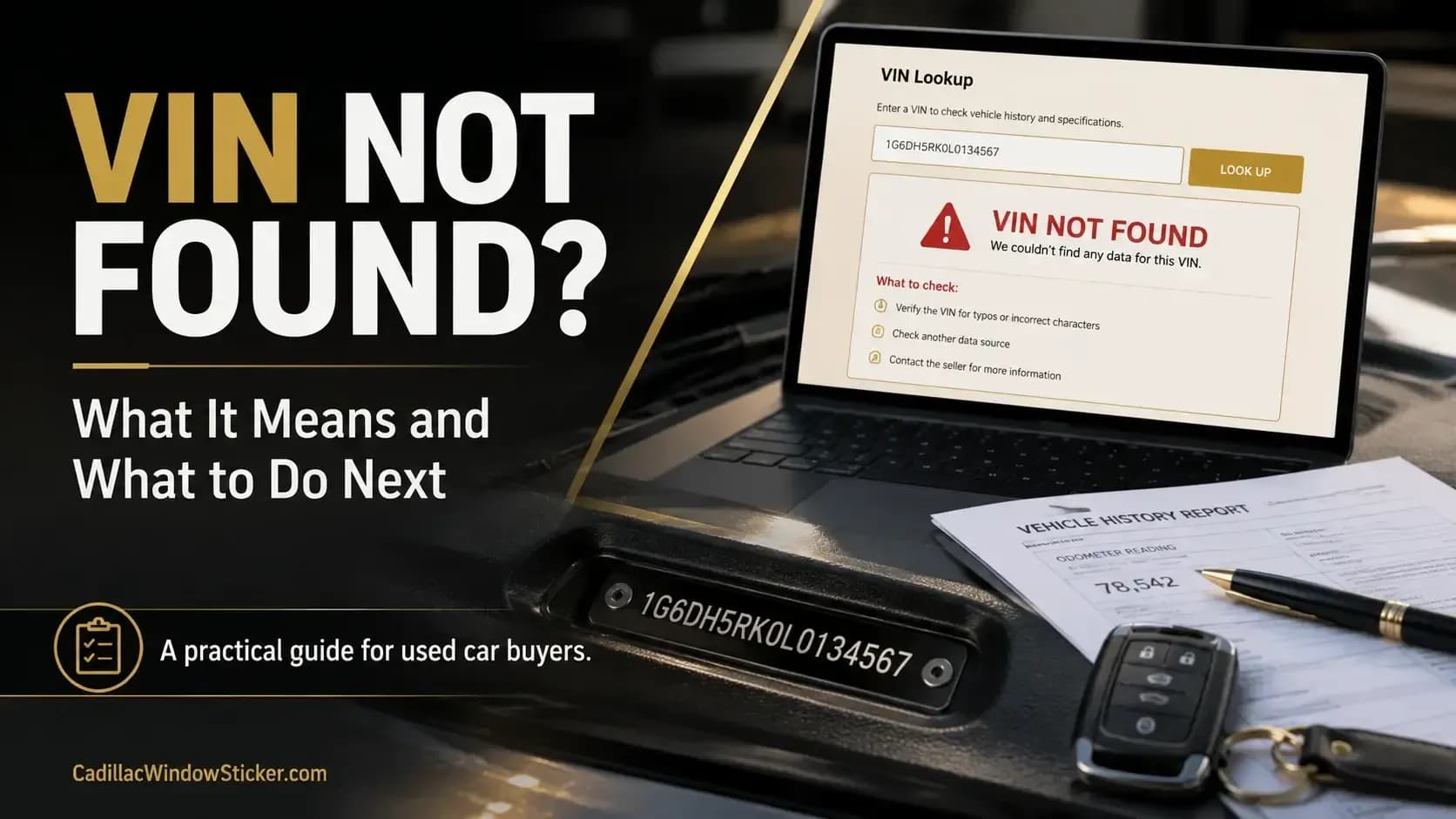
A VIN not found message usually means the VIN was typed incorrectly, the vehicle uses an older VIN format, or the lookup database does not have a matching record. It does not always mean the car is fake, but it should make you verify the number before buying.
If you’re checking a used Cadillac, compare the VIN on the listing with the dashboard, door jamb, title, and registration. Then use a trusted Cadillac VIN decoder to confirm the vehicle details before moving forward.
Key Takeaways
- A VIN not found result can come from a typo, old VIN format, missing record, or limited lookup coverage.
- An invalid VIN number should be checked against the actual vehicle and ownership documents.
- If the VIN still fails, slow down and verify the car before making an offer.
Why a VIN May Not Be Found
A VIN works like a vehicle’s ID card. When a tool cannot read it, the problem may be with the number, the database, or the vehicle record itself. Here’s the thing: the reason is not always serious, but it still deserves a proper check.
1. The VIN Was Entered Incorrectly
This is the plain, boring reason, and it happens all the time. A seller may send a blurry photo. A buyer may type one character wrong. A dealer listing may have a copied number from another vehicle.
A single wrong character can trigger a VIN number invalid error. Look closely at characters like 0 and O, 1 and I, 5 and S, or 8 and B. Modern VINs do not use I, O, or Q, so if one appears, check it again.
2. The VIN Has the Wrong Length
Most modern vehicles use a 17-character VIN. If the number is shorter or longer, many lookup tools will reject it.
Still, an invalid VIN format less than 17 digits is not always a bad sign. Older vehicles may use shorter VIN formats because the 17-character standard was not always used.
3. The Vehicle Is Older Than the Lookup Tool Expects
Classic vehicles can be stubborn. Some older Cadillacs and other vintage cars use shorter numbers, different layouts, or records that were never fully moved into modern systems.
If this sounds familiar, this guide on why older VINs are harder to decode explains why a real vehicle may still confuse a modern lookup tool.
4. The Database Has No Matching Record
No vehicle database has every record. Some tools focus on title history. Some are stronger with service records. Some work better with newer cars.
That’s why a Carfax VIN not found can happen even when the car is real. It may mean the record is missing from that system, not that the vehicle is fake.
5. The Seller Copied the Wrong VIN
This is more common than most people think. A seller may copy a VIN from an old ad, auction sheet, service invoice, or similar vehicle listing.
Sometimes it’s an honest mistake. Sometimes it shows sloppy paperwork. Either way, you need the VIN from the car itself.
6. The Vehicle Has a Thin Record Trail
Some vehicles simply have less digital history. Maybe the car stayed with one owner for years. Maybe it was stored. Maybe it was serviced at small shops that did not report data.
That can create a VIN lookup error even when the vehicle itself is legitimate.
Check the Simple Things Before Blaming the Car
Before assuming the worst, do the basic checks. They take a few minutes, and they can save you from chasing the wrong problem.
1. Read the VIN Slowly
Read every character one by one. If the VIN came from a photo, zoom in. If you’re standing next to the car, check the dashboard plate and the driver-side door label. It feels a little old-school, but it works.
2. Count the Characters
For most modern cars, count 17 characters. Not 16. Not 18. Seventeen. If the vehicle is older, a shorter VIN may be normal. If the vehicle is modern and the VIN is short, that needs more checking.
3. Compare the VIN in Several Places
Check the dashboard, door jamb, title, registration, and insurance paperwork if available. The numbers should match. If they don’t, ask for a clear explanation. A small typo is one thing. A completely different number is another.
4. Ask the Seller for Better Photos
A serious seller should be able to send a clear VIN photo. Ask for the dashboard VIN and door label. If the seller keeps sending blurry pictures or avoids the request, that doesn’t prove fraud. But it does make the deal feel less clean.
When a Missing VIN Result Becomes a Real Concern
A vehicle identification number not working is not always a deal-breaker. But some signs should make you pause and look harder.
1. The VIN Does Not Match the Title
This is a big one. The VIN on the vehicle should match the VIN on the title.
If it does not, do not accept a casual “it’s fine” answer. Title problems can follow a vehicle for years.
2. The VIN Plate Looks Disturbed
Scratched rivets, bent plates, glue marks, or labels that look replaced should be inspected carefully.
Older vehicles can have worn labels. That’s normal. But damage around the VIN area should not be ignored.
3. The Seller Avoids Direct Questions
A genuine seller may not know every technical detail, and that’s okay. But they should be willing to help you verify the VIN.
If they send different numbers, avoid clear photos, or pressure you to pay quickly, slow the deal down.
4. The Vehicle Details Do Not Match
If the VIN says one engine, trim, or body style, but the car appears different, ask why.
It could be a listing mistake. It could be an engine swap. It could be a modified vehicle. If engine details are part of your concern, read this guide on how to check engine details by VIN so you know what a VIN can confirm and what needs deeper checking.
What to Do If Your VIN Is Not Found
So, what to do if your VIN is not found? Don’t guess. Build the answer piece by piece.
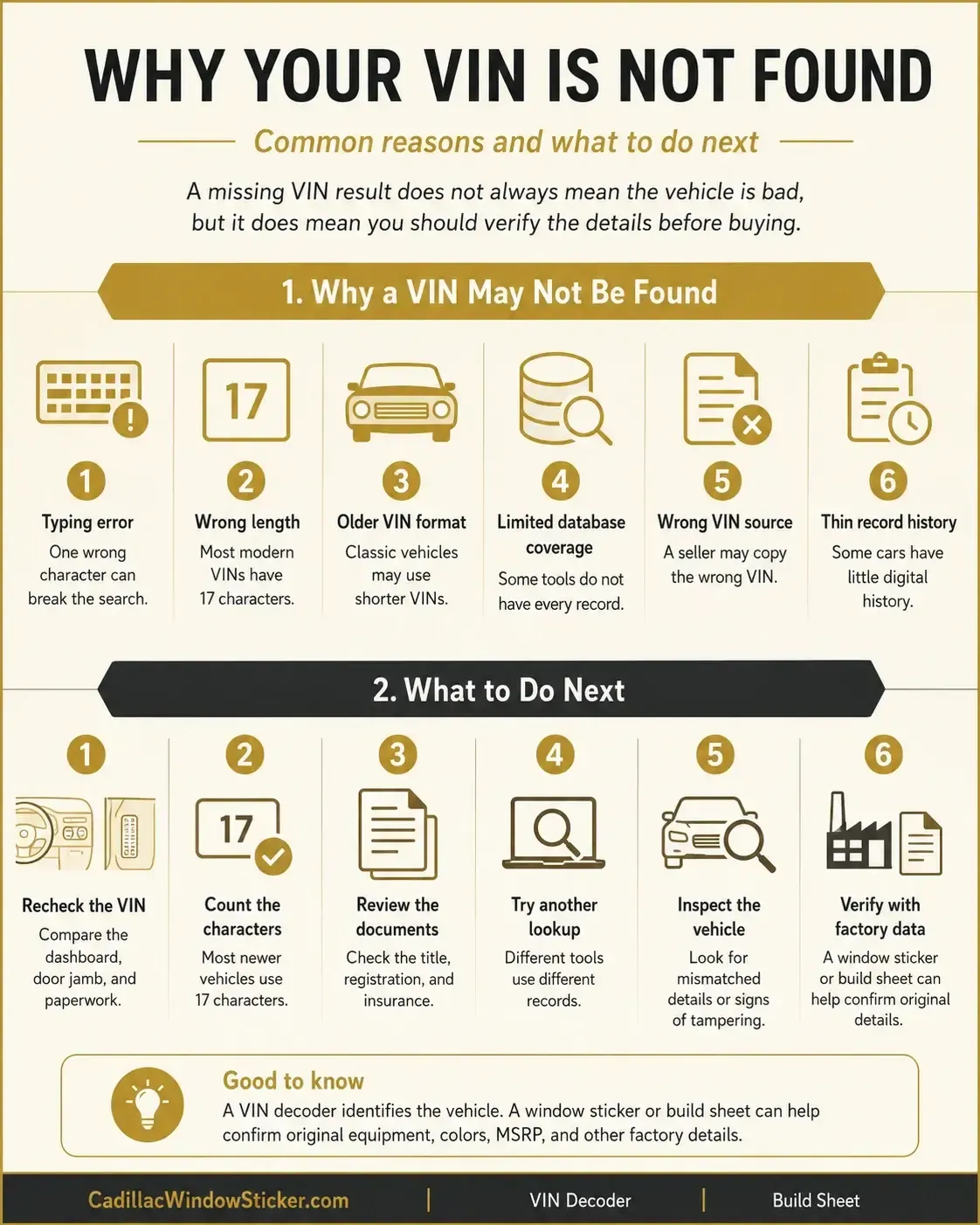
1. Recheck the VIN from the Vehicle
Start with the dashboard and door jamb. These are usually the easiest places to confirm the number.
If the listing VIN does not match the vehicle, ask the seller why. Sometimes it is a typo. Sometimes it is not.
2. Review the Documents
Compare the VIN on the title, registration, insurance papers, and service records when available.
You are looking for consistency. The paperwork should make the vehicle’s story clearer, not more confusing.
3. Try Another Lookup Source
One failed search is not the final answer. Try another VIN tool, a history source, or a factory-data source when available.
Different systems use different records. A miss in one place may return correctly somewhere else.
4. Ask About the Vehicle’s Background
Ask how long the seller has owned the car, where it was registered, and whether service records are available.
You don’t need to grill anyone. Just ask normal buyer questions. A clean story usually stays steady. A messy story often gets messier.
How Factory Data Can Help Clear Up the Story
A basic VIN lookup may show year, make, model, body style, engine, or drivetrain. That’s useful, but it may not answer every buying question.
Factory data can add more context.
A window sticker or build-related record may show original MSRP, factory equipment, packages, paint color, interior trim, warranty terms, and fuel economy data when available. That can help you compare the seller’s claims with how the vehicle was originally built.
For example, a seller may say a Cadillac has a certain package, upgraded wheels, leather seating, or original paint. Factory records can help confirm whether those details were part of the original build or added later.
This is especially useful when you see a VIN number not found for used car results. If one lookup source fails, factory data may still help confirm the vehicle’s original details.
For deeper factory information, a Cadillac build sheet may help verify build details.
Should You Walk Away?
Should You Walk Away?
Not automatically.
A VIN not found message is not a final verdict. It is a pause button. Sometimes the fix is simple. Sometimes it leads to a bigger issue.
If the VIN was mistyped, the records match, and the seller is transparent, the deal may still be fine. If the VIN stays invalid, the paperwork does not match, or the seller avoids basic questions, walking away may save you from a long mess.
Used car buying is part data, part instinct. The records should make the story clearer. If every new detail makes the story foggier, listen to that.
There will always be another car. Bad paperwork is harder to escape.
Frequently Asked Questions
Why is my VIN not found?
Your VIN may not be found because it was typed incorrectly, the lookup tool has limited records, the vehicle is older, or the database has not matched the record.
What does an invalid VIN number mean?
An invalid VIN number may mean the VIN has the wrong length, contains a wrong character, was copied incorrectly, or uses an older format the tool does not support.
How do I fix an invalid VIN number error?
To fix invalid VIN number error issues, recheck every character, count the VIN length, compare the VIN in several places, and try another lookup source.
Is it possible to have a Carfax VIN not found result on a real car?
Yes, it is possible because of the lack of record, the error in entering the VIN or the presence of an outdated VIN number.
Is a shorter VIN an invalid VIN format?
No, an invalid VIN format, less than 17 digits, may be normal for old cars. However, currently, most of the VIN numbers consist of 17 digits.
Why is my VIN found on one website but not another?
Various websites use various databases, and therefore one site might have a match, and another might not. It happens sometimes for old cars, new or rarely reported cars.
Should I purchase a used car if there is a VIN not found?
Think twice about this decision because the VIN not found result does not mean that something goes wrong, but make sure to check the VIN, title, documentation, and physical state of the car.