
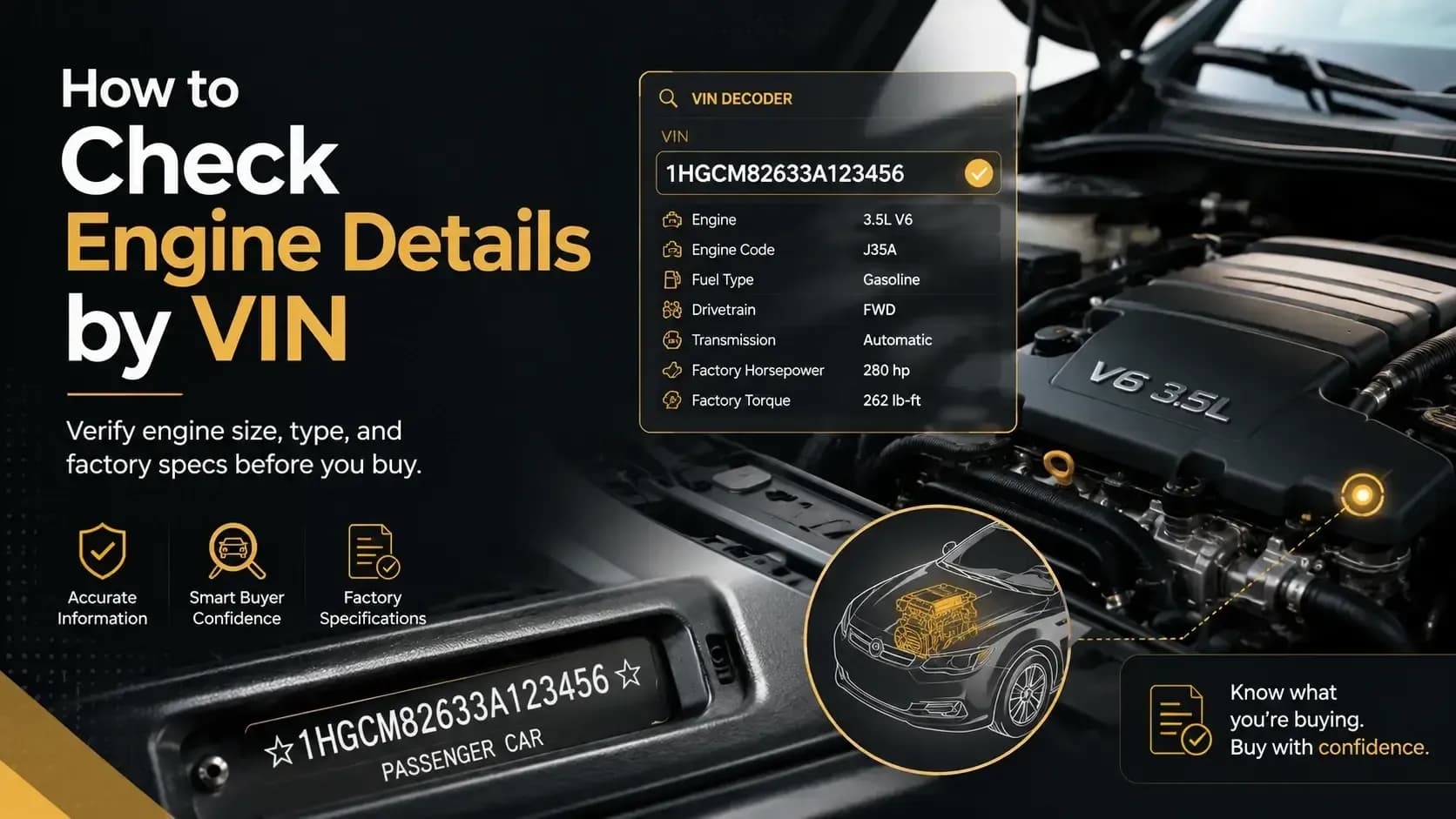
You can check engine by VIN to confirm basic engine information such as engine size, engine type, fuel type, drivetrain, model year, and sometimes factory performance specs. It helps you compare the seller’s claim with the vehicle’s original data before you buy.
For Cadillac vehicles, a Cadillac VIN decoder is a good first step. It can help confirm basic specs before you move into deeper factory records, inspection, or paperwork checks.
Key Takeaways
- A VIN engine check can help confirm engine size, engine type, drivetrain, and related vehicle specs.
- The VIN may not show the unique engine serial number or every detail after repairs or modifications.
- Used buyers should compare VIN data with the listing, physical engine bay, service records, and factory documents.
Start with What the VIN Can Tell You
A VIN is not just a random code. It carries vehicle identity data, and some of that data can help confirm the engine. But let’s keep it realistic: a VIN is not a full mechanical inspection. It can point you in the right direction, but it will not tell you how the engine was treated by the last owner.
When you run a VIN lookup, these are the engine-related details you may be able to confirm.
Engine Size
A VIN may help identify engine size, such as 2.0L, 3.6L, 5.3L, or 6.2L, depending on the vehicle and data source. If you are asking can I check my engine size with a VIN number, the answer is usually yes for modern vehicles.
Engine Type
A VIN lookup may show whether the vehicle has a gasoline engine, diesel engine, hybrid system, turbocharged engine, or electric powertrain when available.
Vehicle Configuration
Engine details often connect with trim, drivetrain, transmission, and body style. That means the VIN can help explain how the vehicle was originally configured, not just what badge appears on the trunk.
Factory-Linked Specs
Some sources may show horsepower, torque, drivetrain, transmission, and related mechanical details when factory data is available. That is where engine specs by VIN become more useful for buyers and car flippers.
How to Check Engine Details Using VIN
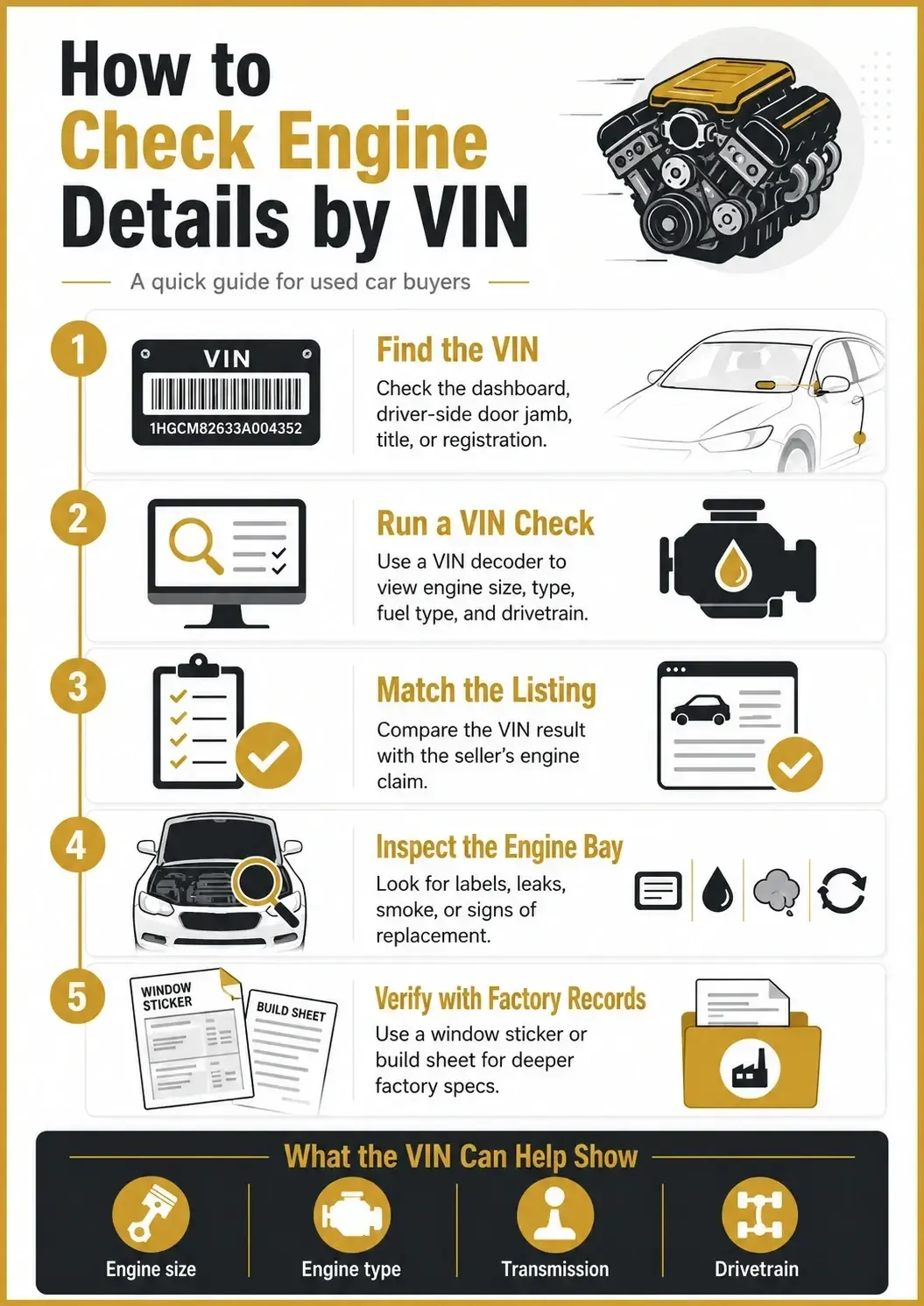
If you want to know how to check engine details by VIN, follow a simple order. This is one of the few places where a numbered process makes sense because each step builds on the previous one.
Look for the VIN on the car
The VIN can be found on the dash board beside the windshield or on the door post on the driver’s side. It can also be located on the title, registration, insurance card, or even on the listing of the seller. Try to use the VIN from the actual car as much as possible since listings are not always accurate.
Enter the VIN on an online decoder
Enter the VIN on a VIN decoder or factory data lookup tool and you will be able to get year, make, model, trim, engine capacity, transmission and drivetrain information. This is the quickest way to get engine specs of a car using the VIN.
Compare the result with the listing
If the seller says the car has a V6, but the VIN result shows a turbo four-cylinder, pause. It may be a listing mistake. It may also mean the seller does not know the vehicle well. Either way, you need the correct engine information before talking about the price.
Check the vehicle physically
Open the hood and look for engine labels, emissions stickers, service tags, and signs of major work. A VIN result is useful, but the car in front of you still gets the final say.
How to Verify Engine Type Beyond the VIN
A VIN check is a strong start, but it should not be the only step. Used cars live real lives. They get repaired, modified, neglected, babied, and sometimes dressed up for sale.
Use these checks to support your VIN engine check.
1
Compare VIN data with the listing
Make sure engine size, transmission, drivetrain, trim, and fuel type match what the seller advertised.
2
Look inside the engine bay
Check for emissions labels, engine covers, service tags, and signs of major work. Fresh bolts, missing covers, or mismatched parts are not always bad, but they deserve a question.
3
Review service records
Oil changes, coolant service, spark plugs, turbo service, timing components, and transmission work all help tell the engine’s story.
4
Listen during a cold start
A cold start can reveal ticking, knocking, rough idle, smoke, or weak battery behavior. Warm cars can hide problems better.
5
Pay attention during the test drive
The car should accelerate smoothly, shift cleanly, and idle without shaking. Smoke, hesitation, burning smells, or harsh shifting should be checked before buying.
6
Bring in a mechanic when needed
If the engine is expensive, modified, rare, or unfamiliar, get a pre-purchase inspection. It is cheaper than guessing.
Which VIN Character Helps Identify the Engine?
People often ask, which digit in the VIN tells you the engine. The common answer is the 8th digit, but that answer needs a little caution.
In many vehicles sold in the U.S., the 8th character can help identify the engine family. Parts counters and mechanics often look at it when checking engine-related parts. Still, the rule is not universal for every brand, year, or market.
Here’s the better way to think about it.
The 8th Digit Can Be Useful
For many modern vehicles, the 8th digit is tied to engine information. It may help identify engine family, displacement, or configuration.
The Full VIN Matters More
One digit alone can be misleading. The full VIN gives better context because engine data may depend on model year, platform, trim, drivetrain, and manufacturer rules.
Brand Rules Can Differ
Cadillac, Chevrolet, Ford, Toyota, BMW, and other brands may structure VIN data differently. A character that matters for one brand may not carry the same meaning for another.
A VIN Tool Reduces Guesswork
Manual decoding can help, but a decoder is faster and cleaner when you are comparing vehicles. It also reduces the chance of reading one digit out of context.
What If the VIN Does Not Show the Engine Clearly?
Sometimes a VIN result feels thin. It may show the model and year, but not the engine. Or it may show a broad engine family without enough detail. That can be frustrating, especially when you are trying to price a car or check parts compatibility.
There are a few normal reasons this happens.
⚠️ Limited data from the lookup tool
Some free tools only show basic details. They may skip detailed engine configuration, horsepower, torque, or factory package data.
⚠️ Multiple engines for the same model
Some vehicles were sold with several engine choices. The VIN should help narrow that down, but not every system displays the result clearly.
⚠️ VIN entry mistake
One wrong character can break the result or show the wrong vehicle. If the VIN fails completely, this guide on why your VIN is not found explains what to check before assuming the car has a major issue.
⚠️ Possible modification or engine swap
A VIN tells you how the vehicle was originally built. It may not tell you if a previous owner swapped the engine later. That is why the VIN, engine bay, service records, and test drive all need to agree.
VIN Engine Check vs Engine Number
This is where the wording gets a little messy. Many buyers search to decode VIN for engine number, but the VIN and the engine number are not always the same thing.
A VIN identifies the vehicle. An engine number, engine code, or engine serial number may identify the engine unit or engine family. Depending on the brand, those may be found in different places.
VIN
The VIN identifies the whole vehicle. It may help show engine size or engine type, but it usually does not provide the engine’s unique serial number.
Engine Code
The engine code may identify the engine family or version. This can matter for repairs, parts ordering, and performance specs.
Engine Serial Number
The engine serial number is usually stamped or labeled on the engine itself. Mechanics may need it for deeper mechanical verification.
Factory Records
A window sticker or build sheet may help confirm what engine the vehicle originally came with. That becomes useful when the engine bay has been modified or when the seller’s description sounds vague.
Example: What Engine Data Can Look Like on a Window Sticker
A window sticker can give engine information more context than a basic VIN result. It may show the engine, transmission, drivetrain, and related mechanical features together, which is useful when you are checking value or verifying a listing.
For example, a 2016 Cadillac CTS Sedan window sticker shows a 2.0L Turbo I4 DI DOHC VVT engine with automatic stop/start. It also lists 268 horsepower, 295 lb-ft of torque, an 8-speed automatic transmission, all-wheel drive, sport suspension, Brembo front performance brakes, and dual exhaust.
That is more useful than simply saying “four-cylinder.”
For a buyer, these details help answer real questions. Does the engine match the listing? Is the drivetrain correct? Are the performance features factory-listed? Does the transmission match the seller’s claim? If the answer is yes, the deal feels cleaner. If not, you know what to ask next.
Why Engine Details Matter Before You Buy
Engine data affects more than performance. It can change value, maintenance cost, fuel use, insurance, parts, and resale. So even if you are not a mechanic, it is worth checking before money changes hands.
Here are the engine-related details buyers should care about.
Price and value
Two cars with the same body style can have different values because of engine choice. A higher-output engine or factory performance package may support a stronger asking price.
Maintenance planning
Turbo engines, performance engines, hybrids, diesels, and V8s can have different service needs. That does not make one better than another. It just means the buyer should budget with clear eyes.
Fuel cost
Engine size, drivetrain, and vehicle weight can affect fuel economy. A smaller engine is not always cheaper to run, but engine data gives you a practical starting point.
Parts compatibility
For car flippers and DIY buyers, engine details matter when ordering parts. The wrong engine code can mean the wrong part, the wrong labor plan, and one more annoying return.
Resale confidence
A desirable engine can make a car easier to sell later. A less popular setup may still be fine, but it can narrow the buyer pool.
Trust in the seller
If the seller’s engine claim matches the VIN, factory data, and inspection, the deal feels more honest. If it does not match, slow down and verify.
When You Need More Than a VIN Decoder
A VIN decoder is great for basic identification. But sometimes basic ID is not enough. If you are checking a high-value car, a rare trim, an older vehicle, or a possible engine swap, factory documents can help give a clearer answer.
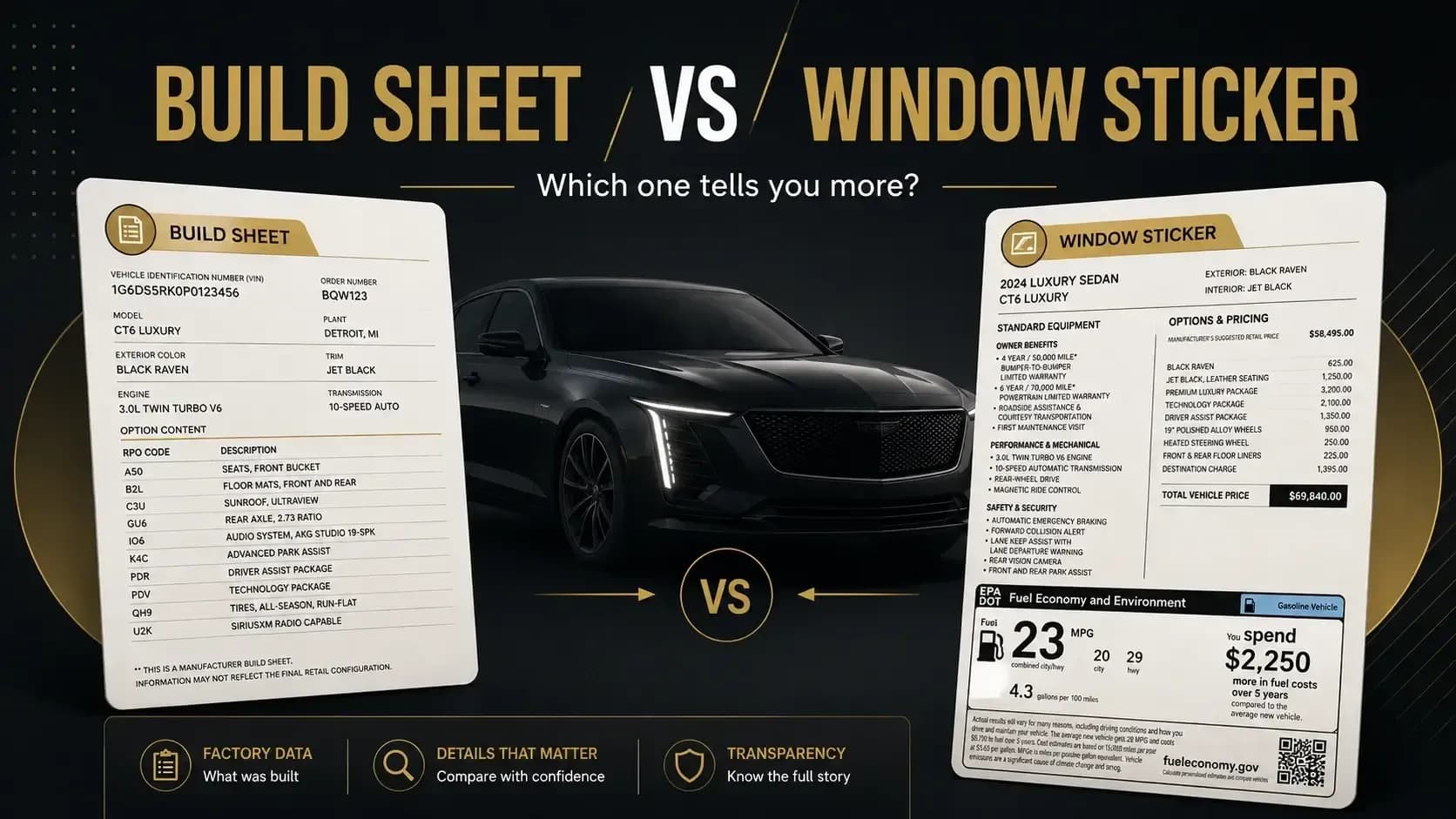
A window sticker can show original equipment, pricing, warranty, fuel economy, and factory-listed features. A build sheet may focus more on factory build configuration. If you want a simple comparison, this guide on build sheet vs window sticker explains how the two documents differ.
For Cadillac vehicles, a Cadillac build sheet may help verify factory build details when available.
Final Thought: The VIN Starts the Story
A VIN engine check helps you start the right conversation. It can confirm engine size, engine type, drivetrain, and related specs. But it cannot always prove the engine has never been replaced, abused, or modified.
So use the VIN. Then use your eyes. Then use the paperwork.
If the engine story becomes clearer as you check it, that is a good sign. If every answer creates another question, slow down. A clean used car should not feel like a riddle.
Frequently Asked Questions
Is it possible to check engine size by VIN number?
Yes, it may be possible to check engine size by VIN number using a VIN decoder or manufacturer's database. The results may depend on a specific make/model/year/manufacturer.
What VIN number indicates engine?
For many modern cars, the 8th digit may indicate the engine information, but there are exceptions to this rule. It is better to consider the whole VIN, as it provides more context, because manufacturer policies differ.
How do I get engine code from VIN?
There are several options to get engine code from VIN, such as VIN decoder lookup, manufacturer inquiry, parts manual lookup, window sticker/builder label inspection.
Can I decode VIN to find engine number?
Engine type or family could possibly be decoded from VIN, but in most cases engine serial number will not be listed in VIN, as it is usually put directly on the engine itself.
How to find out the engine of a car by VIN?
To see how to find out engine of a car by VIN, insert VIN into decoder, check engine info, compare it with a list, look inside engine bay.
Could the engine in a second-hand car differ from the VIN?
Yes, because the VIN will reflect the original car specifications while engine was changed/replaced earlier.