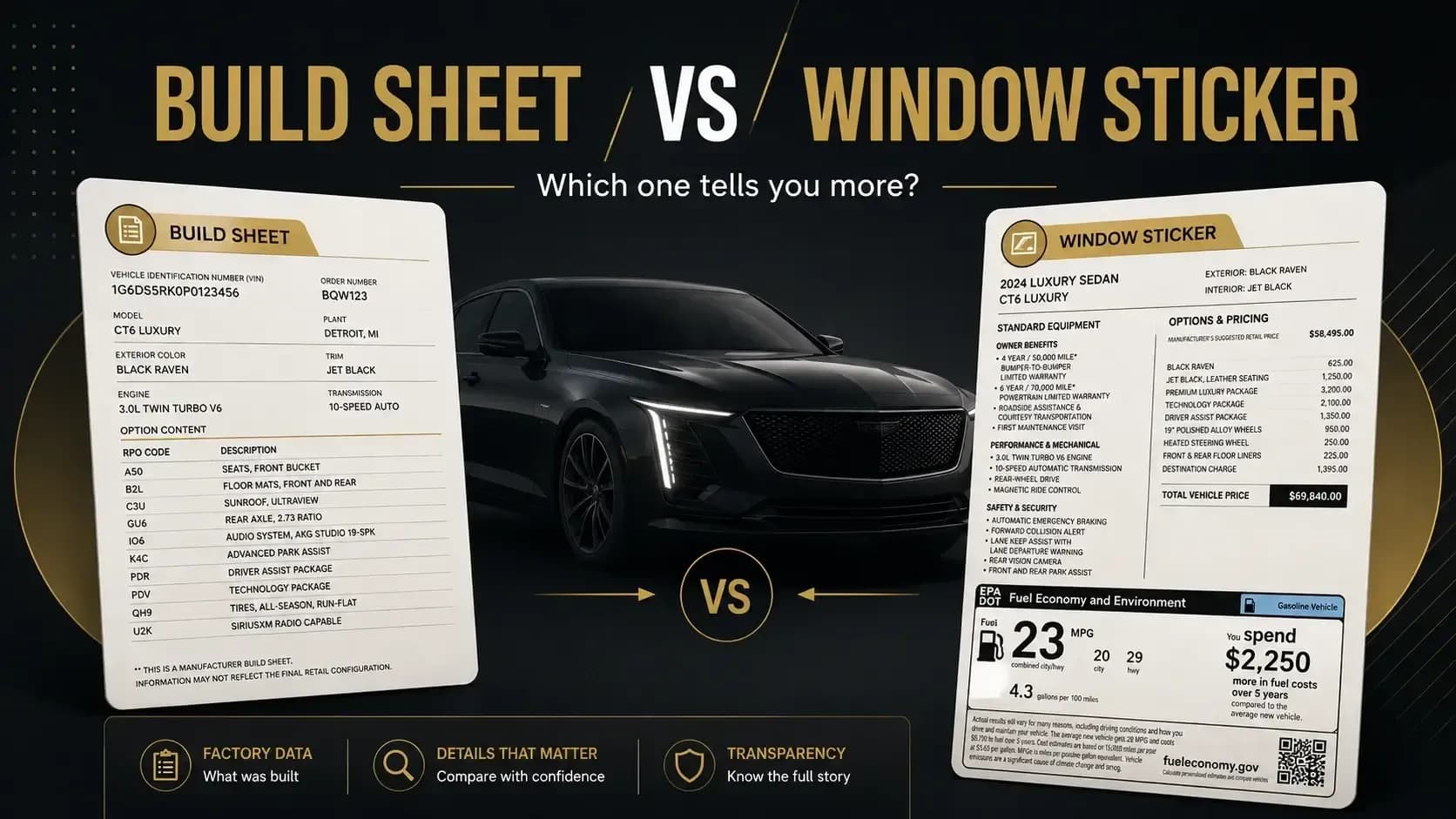

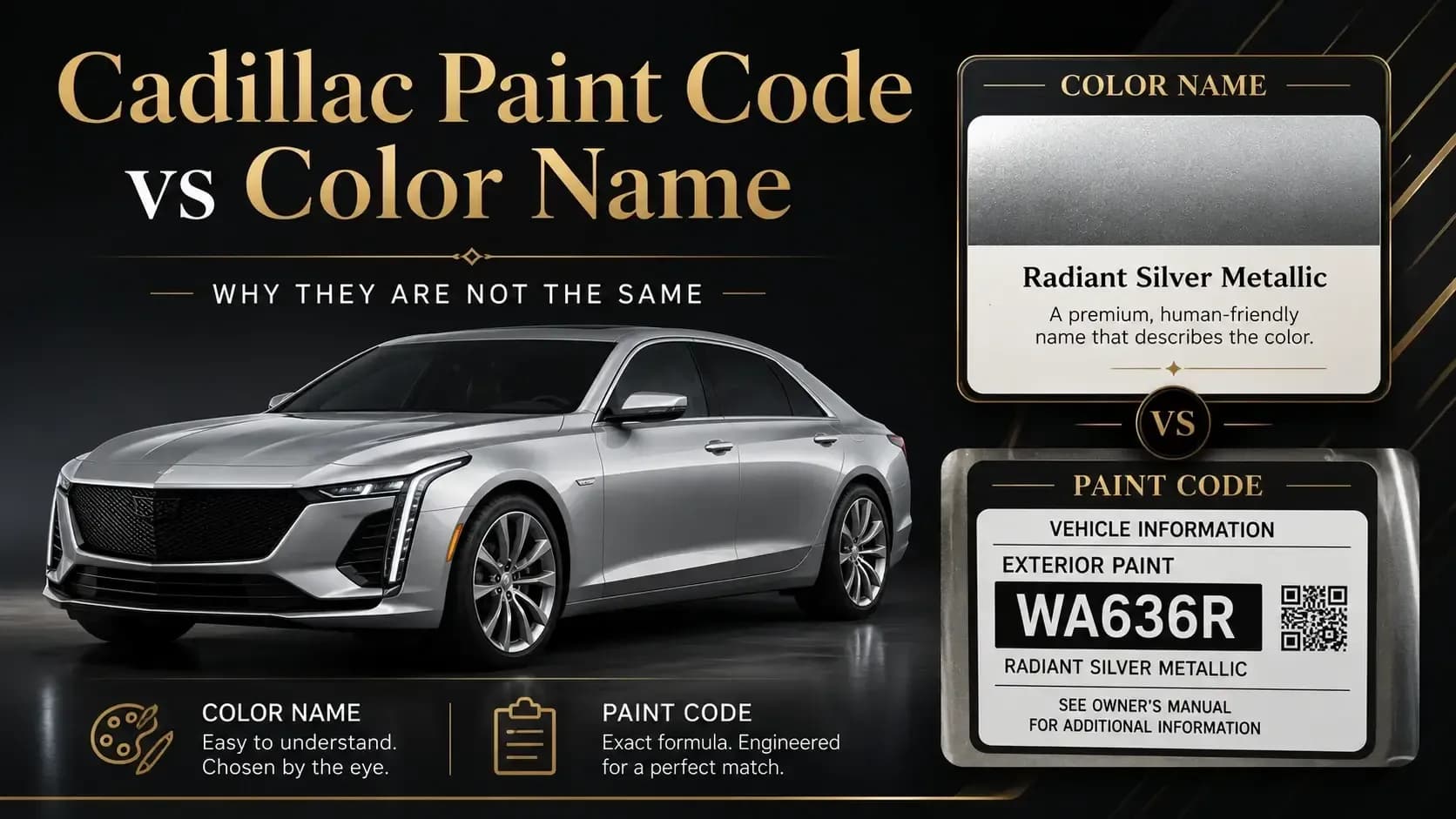
A paint code vs color name comparison is simple: the color name describes the paint, while the paint code points to the exact formula used for matching. If you are buying touch-up paint, repainting a panel, or checking a used Cadillac’s originality, the paint code matters more than the name.
For Cadillac owners and buyers, a Cadillac paint code lookup can help confirm factory color details when available.
Key Takeaways
- A color name is easy to read, but a paint code is more useful for accurate matching.
- The same color name can sometimes have different paint codes across years, trims, or finishes.
- Before buying touch-up paint, check the paint code, factory color record, and the actual vehicle condition.
Start with the Basic Difference
Before we talk about repainting, touch-up pens, or factory labels, let’s clear up the main confusion. A color name and a paint code are related, but they do different jobs.
A color name is what people remember. A paint code is what body shops need.
Color Name
The color name is the public-facing name for the paint. It may sound polished, premium, or brand-specific. Think of names like Radiant Silver Metallic, Black Raven, Crystal White Tricoat, or Satin Steel Metallic.
Color names are helpful when you are reading a listing or comparing vehicles online. They make the paint easier to understand. “Silver” is vague. “Radiant Silver Metallic” is much clearer.
Paint Code
The paint code is the technical identifier used to match the paint formula. It may appear as letters, numbers, or a mix of both, depending on the manufacturer and label style.
This is the detail a paint supplier or body shop usually needs for a touch up paint color match. The code helps them find the correct formula, not just a similar-looking color.
Why They Get Mixed Up
People mix them up because both describe paint. And honestly, it is easy to see why.
A seller may say, “It’s factory silver.” A listing may show a color name. A buyer may assume that is enough. But when you try to repaint a bumper or order touch-up paint, “silver” is not enough. Even “Radiant Silver Metallic” may not be enough without the exact code.
Can You Buy Touch-Up Paint with Just the Color Name?
This question about paint is one that is quite often asked, and the quick answer is yes, you might be able to, but you definitely should not do this.
Using a color name may be helpful, but there is so much more involved when it comes to match painting. This becomes particularly true when it involves metallic, pearl, tint coat, and tri coat paints.
Color Names Can Repeat
Manufacturers may reuse a color name over multiple years. The formula may stay the same, or it may change slightly. A small change can still be visible under sunlight.
Finishes Can Change the Look
A metallic silver and a flat silver are not the same. A pearl white and a solid white are not the same either. The finish changes how light moves across the paint.
Touch-Up Paint Needs a Formula
A touch up paint color match works best when the supplier has the correct paint code. The name helps, but the code gives the formula.
Age and Sun Exposure Still Matter
Here’s the annoying part: even the correct paint code may not match perfectly on an older vehicle. Sun, weather, polishing, repaint work, and panel repairs can change how the paint looks.
So, yes, the paint code is the right starting point. But a good body shop may still blend the paint for a cleaner finish.
Does the Same Color Name Have Different Paint Codes?
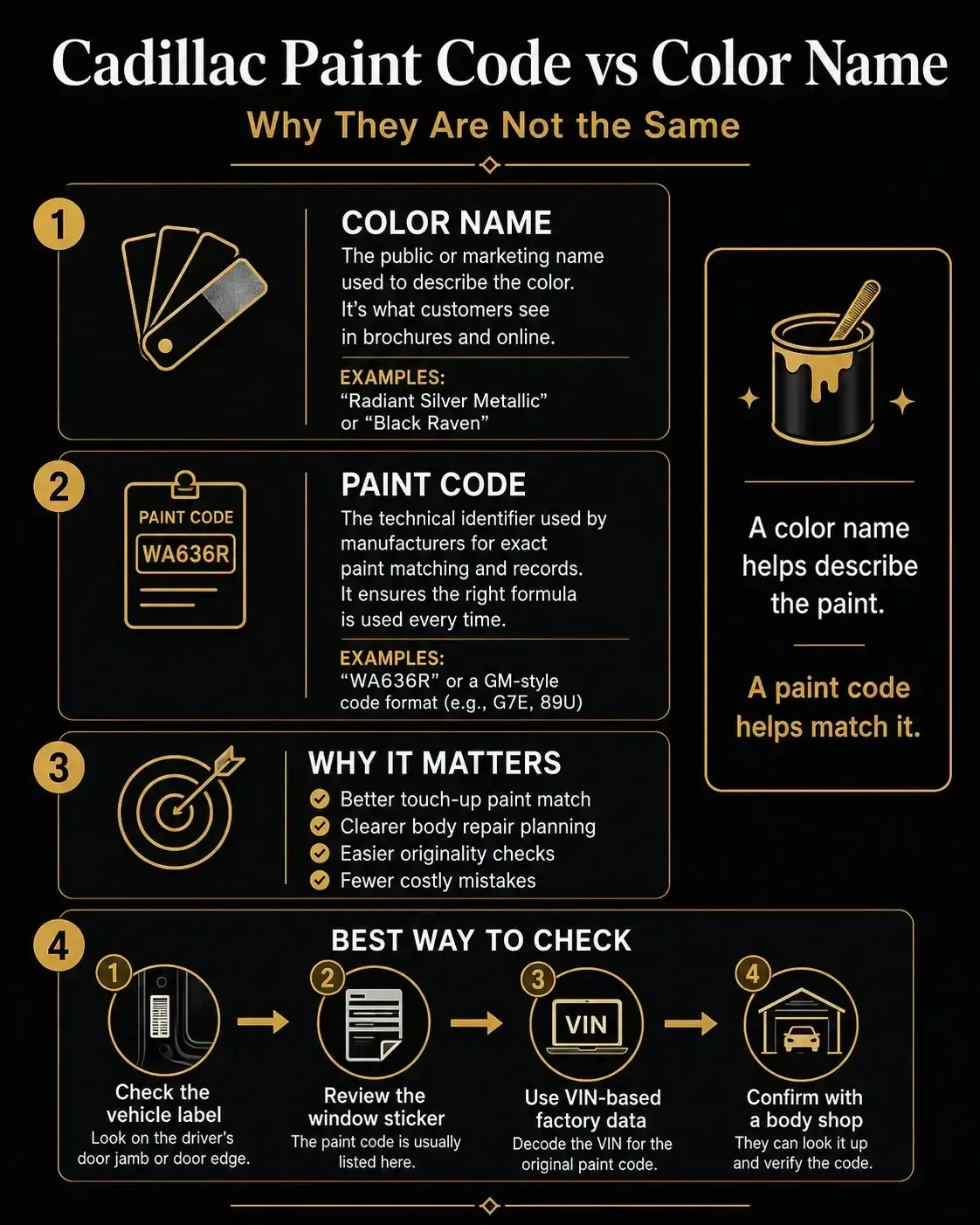
Yes, it can happen. Does the same color name have different paint codes? Sometimes. That is why buyers, restorers, and body shops should not rely only on the name.
This is not always because a manufacturer is trying to confuse people. Paint systems change. Suppliers change. Model years change. Special editions happen. And some colors may have different versions for different applications.
Model Year Changes
A color name may carry over from one model year to another, while the formula changes slightly. A 2016 paint formula may not always match a later version with the same name.
Different Paint Systems
Some colors use solid paint, while others use metallic, pearl, tintcoat, or tri-coat systems. Those finishes may need different layers or application methods.
Factory or Supplier Differences
Paint production can involve different suppliers, plants, or label formats. The visible name may stay friendly for buyers, while the technical code keeps the formula clear for repairs.
Special Appearance Packages
Some vehicles have appearance packages, accent colors, roof colors, stripes, or trim details. A simple color name may not explain the full exterior setup.
This is why factory records matter. A window sticker or paint-code lookup can help confirm the original exterior color, interior color, paint application, and related appearance details when available.
What Does a Car Paint Code Look Like?
If you are asking what a car paint code looks like, expect something less glamorous than the color name. Paint codes are usually short, technical, and easy to miss.
On many GM and Cadillac-style labels, you may see formats like WA codes, U codes, BC/CC references, or shorter numeric versions. Other manufacturers may use different label styles.
The important thing is not to memorize every format. It is to know what you are looking for.
Code Format
A paint code may include letters and numbers. It may look like WA8555, U8555, BC/CC U8555, or another manufacturer-specific format.
Label Location
The code may appear on a vehicle information label, Service Parts Identification label, door jamb label, trunk label, glove box label, or other factory label area depending on the model and year.
Color Name Nearby
Sometimes the color name appears near the code. Sometimes it does not. If both are available, keep both for reference.
Paint System Notes
You may see terms related to basecoat, clearcoat, monotone paint, tintcoat, or special paint application. Those notes can matter during repair.
For example, a Cadillac window sticker may show Radiant Silver Metallic as the exterior color and Monotone Paint Application as a listed item. That gives the buyer more context than a basic “silver” description.
How to Find Car Paint Code Details
1. Check the Vehicle Labels
Look around common label areas first. On many vehicles, paint information may be found near the driver-side door jamb, glove box, trunk, spare tire area, under the hood, or factory information label.
2. Review the Window Sticker
A window sticker may show original exterior color, interior color, paint application, packages, and appearance-related equipment. It may not always show the exact code, but it can confirm the factory color name and related details.
If you are not sure how to read those sections, this guide on how to read a window sticker can help you understand what the sticker is showing.
3. Use VIN-Based Factory Data
A VIN-based lookup may help connect the vehicle to original factory color information when available. This is useful when the label is missing, faded, or hard to read.
4. Ask a Body Shop to Confirm
For repainting or panel repair, let a body shop confirm the code and compare it with the actual paint condition. A professional may need to blend the color, especially on older vehicles.
Example: Why Factory Color Details Matter
Let’s use a Cadillac-style example. A 2016 Cadillac CTS Sedan window sticker may show Radiant Silver Metallic exterior and Jet Black/Jet Black Accents with Leather Seating Surfaces inside.
That sounds simple enough, right? Silver outside, black inside.
But the sticker can also show more details that matter for verification, such as Monotone Paint Application, Black Chrome Package, Bright Chrome Accent Grille, Bright Chrome Rear Fascia Molding, and 18-inch premium painted alloy wheels. Those details help describe the vehicle’s original factory appearance.
For a buyer, that matters because photos can be misleading. Lighting can make silver look darker. Repainted panels can look close until the car is parked in direct sun. A seller may not know whether a chrome accent was factory-listed or added later.
Factory color details help tighten the story.
Why Paint Code Accuracy Matters Before Buying or Repainting
Paint looks emotional. Paint codes are technical. Used car buyers need both.
A great color can make a car feel special. But if you are buying, flipping, restoring, or repairing the vehicle, you need the details behind the shine.
Better Touch-Up Paint Matching
If you buy touch-up paint with only the color name, you may get close. But close can still look wrong on the bumper, mirror cap, or door edge.
The paint code gives the supplier a better starting point.
Cleaner Body Repair Planning
Body shops use paint codes, finish type, and blending judgment to repair panels. Without the correct information, a small repair can become visible from ten feet away.
Used Car Originality Checks
Factory color records can help you spot repaints, color changes, or mismatched panels. That does not always mean the car is bad, but it should affect your questions.
Better Resale Confidence
For car flippers and enthusiasts, original color matters. A desirable factory color can help presentation. A poor repaint can hurt value.
Restoration Accuracy
If you are restoring a Cadillac, the difference between a color name and paint code becomes more than paperwork. It can shape the whole look of the car.
Fewer Costly Mistakes
Wrong paint means wasted time, extra sanding, more labor, and sometimes repainting the same panel again. Nobody enjoys paying twice.
What Buyers Should Check Before Trusting the Paint Story
A seller may describe the car as “factory color,” “original paint,” or “freshly painted.” None of those phrases are automatically bad. They just need support.
Before you believe the paint story, compare the words with the car and the records.
Compare the Sticker with the Car
Check whether the exterior and interior colors match the factory record. If the sticker shows one color and the car is another, ask why.
Look for Panel Differences
Stand at different angles and look across the body. Mismatched shine, texture, or shade can suggest repaint work.
Check Edges and Hidden Areas
Door jambs, trunk edges, under the hood, and around trim can reveal older paint, overspray, or color changes.
Review History and Repairs
A repaint may be cosmetic, or it may follow accident repair. If you are buying used, connect paint clues with service records, history checks, and inspection.
If you want a broader buying process, read this guide on what to check before buying a used car. Paint is only one part of the story.
Final Thought: The Name Gets You Close, the Code Gets You Closer
The Difference between paint code and color name is not just technical trivia. It can affect touch-up paint, body repairs, restoration accuracy, and used-car value.
A color name helps you talk about the paint. A paint code helps you match it.
So before buying touch-up paint, repainting a panel, or trusting a seller’s color claim, check the code when possible. Then compare it with the vehicle, the factory record, and the actual paint condition.
For Cadillac owners, a Cadillac paint code lookup can help confirm factory color details when available.
Frequently Asked Questions
What is the difference between paint code and color name?
A color name is the readable name of the paint, such as Radiant Silver Metallic. A paint code is the technical formula identifier used for matching, repairs, and touch-up paint.
Can you buy touch-up paint with just the color name?
You can sometimes search by color name, but it is safer to use the paint code. Color names can repeat or change across years, while paint codes are more precise.
Does the same color name have different paint codes?
Yes, the same color name can have different paint codes depending on model year, paint system, supplier, or vehicle application.
What does a car paint code look like?
A car paint code may appear as letters, numbers, or both. Some GM-style codes may look like WA8555, U8555, BC/CC U8555, or a shorter numeric version.
Can a VIN show my exact paint code?
A VIN may help retrieve factory color details when connected to the right data, but the VIN itself does not always directly contain the exact paint code.
Why does my touch-up paint not match perfectly?
Even with the right code, paint can fade over time. Sun exposure, previous repairs, panel age, and application method can affect the final match.